I don’t remember exactly when I gave in to screen time with my daughter, but I resisted it for the first several months of her life. When Claire was an infant, I wanted her to look at books and high-contrast imagery to develop her brain and vision and curiosity! I wanted her to develop a keen sense of focus versus the jumpy attention span that YouTube clips and social media scrolling can affect.
I still want that. But I’ve also embraced the truth that we live in the digital era. Kids are going to see screens. And they are going to like those screens.
A prime example: When Claire was just a few months old, we took her to the local aquarium with her cousins to delight in fish, etc. At one point, I looked over at her and exclaimed how captivated she was by a certain fish tank. Then my husband clarified that she was actually staring at the TV screen above the tank that was broadcasting a video of fish. Kids are drawn to screens. Adults are drawn to screens. It’s just a fact.
As with any vices in life, we can enjoy screen time mindfully, and we can help our kids do that, too. It doesn’t have to be about binge-watching and mindlessly scrolling. It can be a source of joy and fun and education with a time limit.
It can also be a tool – something to focus our kids’ attention on while we get something done that needs to get done.
A mindful reframe on screen time for kids
Just this week, I started to reframe the idea of screen time for kids when I listened to a Good Inside podcast episode on the topic. Educator Ash Brandon honed in on this consideration: “How do I make sure that we’re incorporating the need of our family and starting from that place when I’m thinking about our relationship with screens?”
Incorporating the need of our family. I love that. In what instances is screen time useful? Does it promote joy? Learning? Productivity? I’m working to approach screen time through this lens, and I make a point to cap it at 30 minutes or so at a time. That’s a big enough time block to use screen time in a productive way – then I can move Claire to another activity such as playing outside, going for a walk, reading a book, coloring inside, etc.
Does she get upset about the end of screen time? Every time. But I tell her: “I know! It’s so hard to stop doing something we’re enjoying. But that was so fun, and now we get to go outside.”
4 reasons to reframe and embrace screen time for kids
- It adds an element of joy.
- It supports learning.
- It enables a parent to get tasks done at home.
- It enables a parent to run errands.
It adds an element of joy.
My daughter is thrilled to watch Miss Rachel and Elmo get ready for school – the biggest smile pops up on her face when I queue it up. She’s been watching segments from that same episode many days over the past couple months.
It supports learning.
I particularly like Miss Rachel’s content because of its educational quality, so that’s what I currently default to. I have a chatty one-and-a-half-year-old, and she keeps picking up words, phrases and gestures from Miss Rachel’s channel. She does a good bit of counting and singing the alphabet. And while I certainly can and do count and sing with my daughter, it’s nice to have someone else fill in the gap. We’re in such a phase of constant repetition of actions and words and songs and books – it’s simultaneously lovely and tiring.
It enables a parent to get tasks done at home.
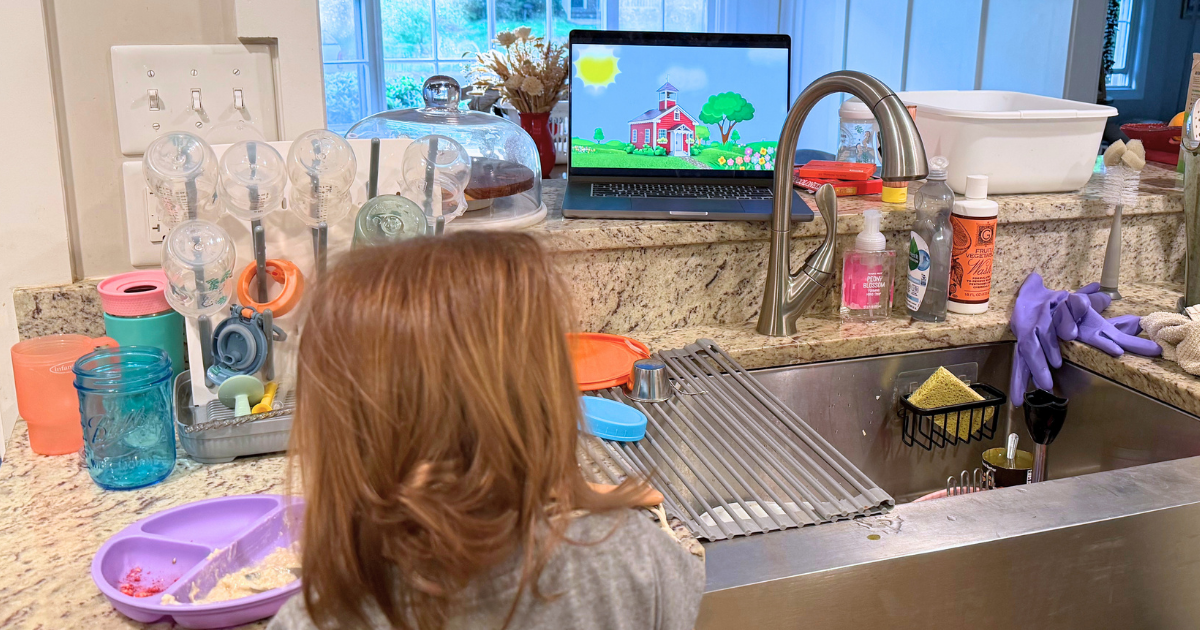
Most weekday mornings, I’ll turn on a segment of Miss Rachel for Claire to enjoy in her kitchen tower while I clean up the the kitchen, fold laundry, and/or get myself ready for my work day. (On the rare snow day or daycare cancellation day, it’s also helped me maintain my remote workday – to a degree – while having her at home with me).
With screen time, Claire is happily occupied and I’m happily knocking out a few house tasks and getting ready for my own day. Since my daughter is right there with me, I love that we can connect during our different activities; she looks at me when singing and dancing to certain songs (like “Wheels on the Bus”) so I can join in, and I frequently pause to give her a squeeze and a kiss while I’m moving around the kitchen.
I try to cap these segments at 30 minutes, so we’re not falling into the trap of hours of screen time. And you can get a lot done in 30 minutes.
It enables a parent to run errands.
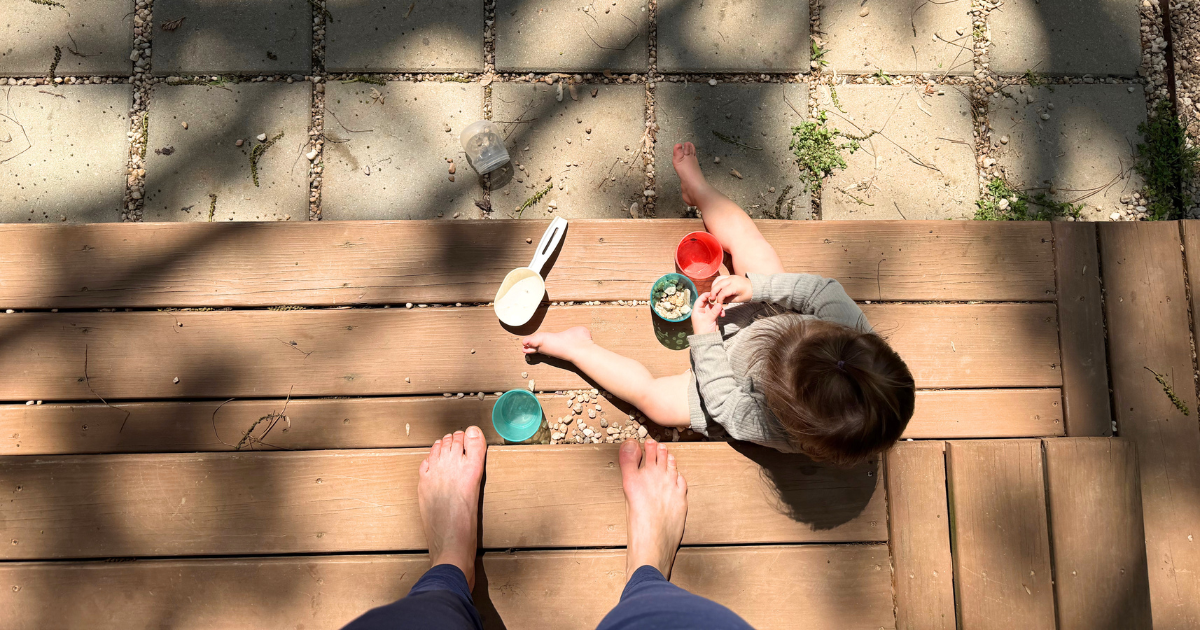
Most days after school and work, Claire and I head to the playground or home to the sandbox to soak up outdoor time. But I also need time to go to the grocery store, and it’s not convenient during childcare hours when I’m trying to focus on work and squeezing in a workout.
Today, we drove to the busier part of the city for our weekly Trader Joe’s excursion. I hesitated because I hate losing time in traffic, and I want Claire to be able to enjoy being active after school. But we really needed groceries. Claire happily chatted with me and read books on the way to the store.
On the way home, in traffic, I set my phone near her car seat with our go-to Miss Rachel episode. Claire was happy and stimulated for the next 35 minutes, and I got to ease into a traffic-riddled drive home that was mostly tension-free due to the lack of a screaming/fussing toddler. We got home, unloaded groceries, got toddler dinner prepped, then enjoyed an hour outside playing before bath time and bedtime. Balance.
I’ve loved leaning into that reframe with screen time: How does it help your family? It adds to my child’s happiness and helps her learn. It helps me get things done that are important to our household/family/me. I still feel guilt around it – but letting go of that is just another practice.