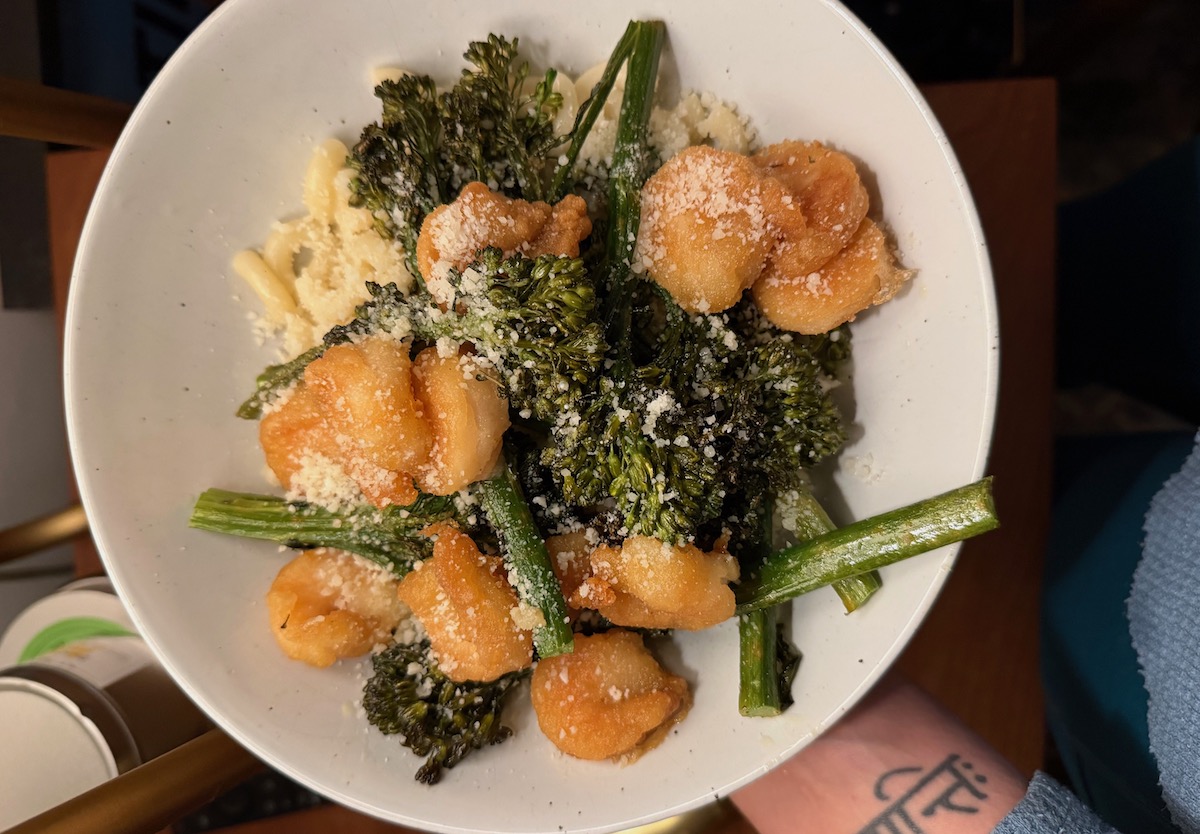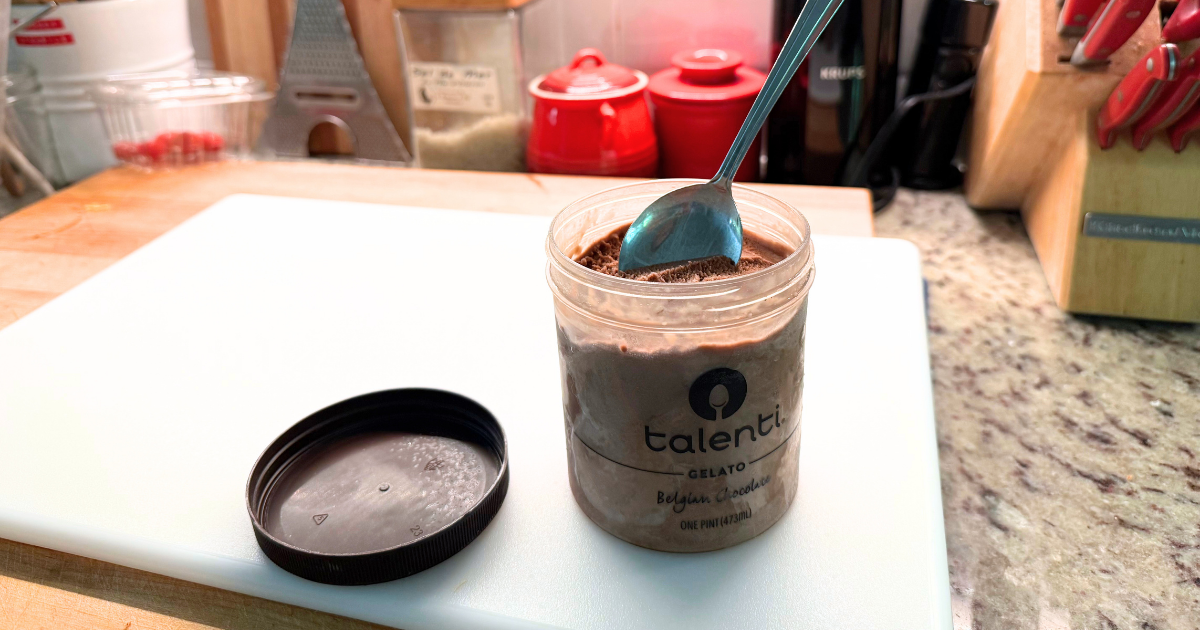
What is mindful eating? Mindful eating might be a key way to prevent (a) overeating and (b) underfueling. While there are variations on how it works, it’s essentially a practice that involves leaning into your physical and emotional senses to experience your food. If you are intentional about fully experiencing and feeling your food in your body, you can more easily stay in tune with your fueling needs.
Here are a few mindful eating tips to try:
- Be intentional about the space I create for myself before I sit down and eat;
- Be slow and intentional about how I eat.
- Sit down.
- Take moderate bites and chew fully.
- Experience it all.
- Pause. Notice how the body feels. Release tension if needed.
- Take a moment to feel gratitude.
- Signal to yourself that your meal is complete.
Here’s how I walk myself through the practice, and how it can help prevent binge eating.
Step 1: Put away distractions.
In order to be fully present with where I am and with what I’m doing, it helps to shut down everything else. Put my phone away. Put my computer away. (This one is especially big for me – working through lunch is like putting myself right back in my high school trigger zone when I’m studying/stressing/eating/studying/stressing/eating. I don’t like to work while I eat. Setting my computer aside sets aside that stressor.) Put containers of food away – sometimes leaving a whole container of leftovers on the counter nearby while I eat is distracting because it keeps promising, You can come back for more whenever! Then some attention is always on that promise/temptation, when I need all of my attention on the plate in front of me. I need to set my space up in a way that allows me to focus on this full, balanced, beautiful plate.
Step 2: Reduce any stress.
As I set up my environment for mindful eating, I set up my body for mindful eating. It’s easy to rush into a meal with a lot on my mind, especially in the middle of the day. I pause a few deep, cleansing breaths to slow down my heart rate and clear my headspace.
Breathe in through nose, open mouth, sigh it out.
Step 3: Sit down.
It doesn’t help to position my body like I’m ready to drop my plate and run to the next thing, like more food in the kitchen. It doesn’t help to hunch and hover over my food at the kitchen counter like I’m scared someone’s going to see me. I carry my plate to the dining table, sit down and give it the full attention it deserves.
Step 4: Take moderate bites and chew fully.
There’s a clumsiness to bingeing: rapidly choking down food without properly chewing, chipmunk cheeks bulging and pulsing hard. Eating mindfully smooths this out, it’s serene: taking manageable, small bites. Moderate forkfuls that fit comfortably in the mouth, easy to chew.
When you chew fully, you actually give your brain enough time to acknowledge that food intake and generate a enjoyable emotional response. I find this especially helpful as someone who used to tend to feel bloated after meals. I like to think about it this way: When food reaches your stomach, your stomach contracts to break it down into partially digested semifluid called chyme. If you chew your food fully and let your saliva start to break that food down before it reaches your stomach, your stomach has to work less hard. At the same time, chewing fully slows down your experience, prolonging your enjoyment of your meal. Psychological and physical benefits.
Step 5: Experience it all.
After putting effort into building this balanced meal and into slowing down with the experience of it, I try to notice it all:
- The variety of food
- The variety of texture, temperature
- Each taste
- The space I’m in
- The conversation I’m in, or the silence I can sink into
I sit back, I slow down, I tuck in. I relish it.
Step 6: Pause. Notice how the body feels. Release tension if needed.
During my experience, I like to put down my utensil or food and pause. Take a sip of my beverage. Notice: Is there tension in my chest or in my headspace? Could this lead to overeating? I take a couple of cleansing breaths – in through the nose, out through the mouth. Let the heart rate slow down, let that tension dissolve. Feel that dangerous threshold drop away.
Then, keep feeling. Notice: Is there hunger gurgling in the stomach? Continue practicing those moderate bites, that full chewing.
Notice: Is the stomach starting to feel pleasantly full, gently taut? Is now a comfortable time to stop eating?
Honoring fullness is one of my favorite principles of intuitive eating. It’s also one of the hardest to tune into and act on. Binging can throw hunger and fullness cues might be out of whack, and mine certainly were after years of not paying attention to them.
Good news: The more routine I got about building balanced meals and cultivating mindfulness while I experienced food, those cues started to reset. It’s frustrating, but I gave it time. I started by looking at the balanced plates I’d build: I knew, objectively, these should satisfy my nutritional needs. Even when my body wasn’t strongly cueing me to stop eating, my logical mind could start to do that work. And, over time, my body started to catch up. She started to tell me when she needed more, and when she was done.
Step 7: Take a moment to feel gratitude.
I swear, the majority of the time I only “have problems” when I forget to be grateful. Corny? Maybe. But I’m a sucker for gratitude. I find that one of the quickest ways to shift my immediate relationship with something (or even someone) from negative to positive is to be grateful for that thing (or for that person).
Say I’m sitting alone at my dining table in the middle of the work day, worried about a deadline I’m about to get back to and feeling stress build up around the plate of food I’m eating. I go from mindful eating to feeling that itch to reach for more, even when my brain and body tell me I don’t need it. Bumping up against that threshold for overeating, I can take my deep, cleansing breaths and think: Wait. I am so thankful for the food in front of me. I am so thankful to have the time and flexibility and freedom to sit here and experience it, and to even be able to afford food to fuel my body and nourish my spirit. I am thankful to be employed and to have work to do today; my stress is only telling me that I care about getting something done on time. Then I can get up, put my plate away, and prepare to move onto the next thing in my day. My peace is back.
Step 8: Send a signal to my body that my meal is complete.
I never really thought about doing this until one of my visits to northern France with my husband’s extended family. It was summertime and we were relishing long, family-style meals outside, with multiple dishes passed from one end of the table to the other and drawn-out, animated conversations. It was a delight to notice (and partake in) this: Both lunch and dinner wrap up with the hiss and churn of the giant Nespresso machine and passed chocolates. It’s a simple, beautiful ritual, sharing these end-of-meal treats. Bitter heat of coffee lingering in the belly and the back of the tongue, sweet creamy sugar swirling in. Everyone sits back, wraps up the conversation, savors the bitter and the sweet.
When I returned home from the trip, I found myself craving that ritual. That slowdown to top off a meal, especially at lunchtime when I was in the middle of a remote workday at home. So I added that into my eating routine. It doesn’t have to be coffee, but it can be. It doesn’t have to be chocolate, but it can be. I’ll either brew a hot cup of decaf coffee to sip as I shift back into work or whatever it is I’m up to, or a couple of pieces of chocolate. Sometimes it’s a mug of ginger tea for digestion, or a mint, or that fizzy kombucha in the fridge I’ve been looking forward to. Something to signal the close of the meal, let my body enjoy it, let my brain relax into it.
After practicing mindful eating, jump right back into the flow of productivity and purpose.
After so many years of bingeing, I had essentially conditioned my body/brain to want more food immediately after finishing a meal. To the point where I’d be placing the final bites in my mouth and, rather than focusing in on those bites, I’d already be wondering what I was going to stand up and reach for next. I’d feel a surge of anxiety: What’s next? What’s next? And I’d know I was moments away from taking those first steps into yet another mindless whirlwind of bingeing.
Now, I’m fully aware: There are more important things to be putting my time and energy into than finishing a meal and launching myself more food. There are more important things to be putting my time and energy into than stressing and eating and recovering from eating.
If you struggle with bingeing, that moment after finishing a meal is fragile. You could slide into a binge or you could gently step into your next activity, something that means something.
What means something to me is any activity that is productive in some way: my next work project, cleaning up the kitchen or the house, taking the dogs for a walk, settling onto the couch to watch a show with my husband, something big or something small.