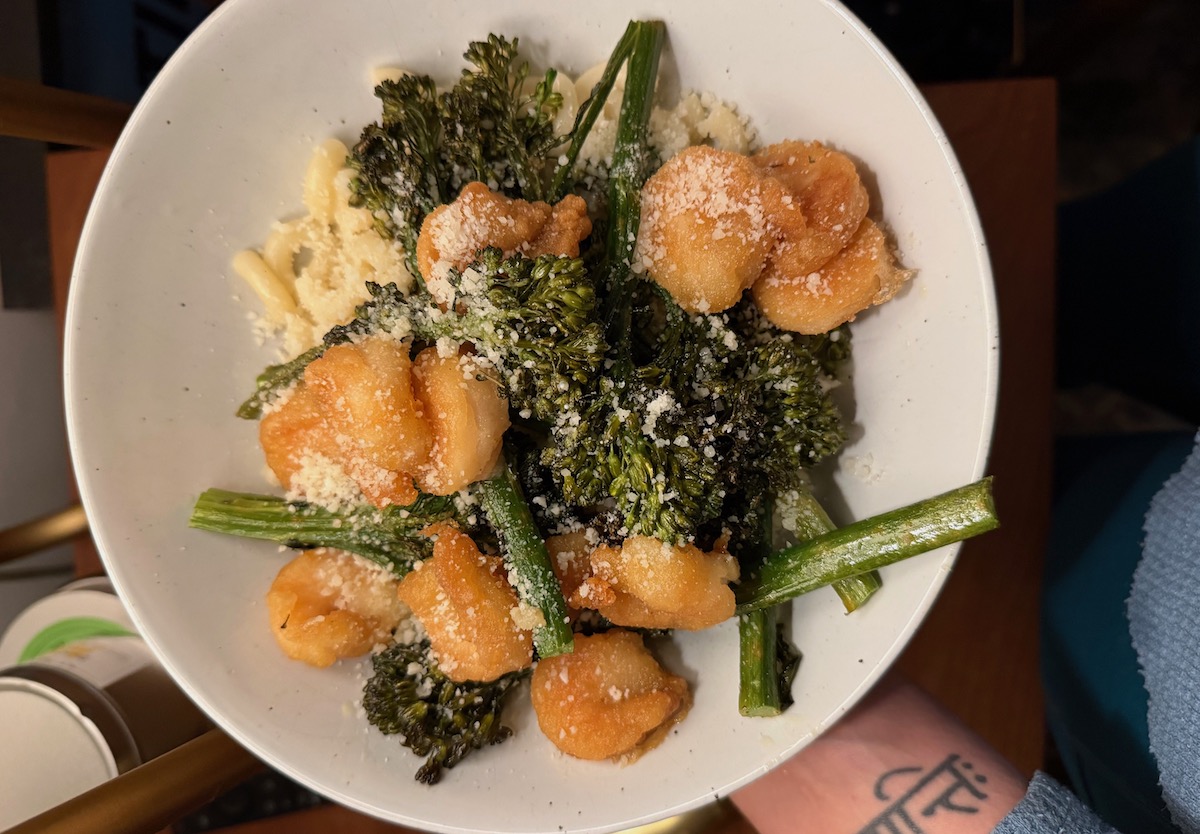
There is no perfect way to eat, or perfect schedule for eating. When it comes to how often you should eat, even the experts say it depends on the person – are you trying to support a certain weight management approach? Do you need to support disease-related needs, like blood sugar control for diabetes? Does your work schedule require flexibility around mealtimes? Does your body and energy balance just feel best eating on a certain timeframe?
When determining how often you should eat, it comes down to: What’s best for you?
After struggling with bingeing and purging for years, what’s best for me turned out to be:
- 3 square meals
- 1-2 snacks as needed/wanted
Back in my disordered eating days, I didn’t realize how my basic approach to each day of eating was dooming me to fail at developing healthy eating patterns. In my teens and early twenties, I’d wake up, drink black coffee, work out, eat one measly protein bar or skip breakfast entirely, eat vegetables for lunch, and move into my afternoon hungry. I was in the mindset of: I can’t be trusted to not go crazy around food, so the less I can eat during the day, the more in control I will be. INCORRECT. Restriction can turn the body ravenous and the mind reeling – distracted and moody and food-obsessed. This lack of balanced structure during each day can breed chaos: restrict, binge, purge, repeat.
When I started to be intentional about building balanced meals (protein/carb/fat/plant color/craving) each time I ate, my body and mind were naturally more satisfied after each main meal (breakfast, lunch, dinner). I didn’t have energy crashes and I also didn’t feel stuffed or deprived after eating. My hunger and fullness cues were revived and increasingly easier to notice and to honor, and regular mealtimes started to feel right.
I know some people do better with many small meals during the day (and I’ve tried that), but I found it distracting. If I’m constantly snacking, I’m constantly thinking about food, which doesn’t work well for my mental health. I also noticed that smaller meals tended to make me feel bloated and sometimes crampy. This could be part of the why: From a digestive perspective, it generally takes about six hours for food to move through the stomach and small intestine. This tells me my body doesn’t need to eat every couple of hours, especially if I’m mindful about increasing satiety and slowing digesting with complex carbohydrates, fats, and proteins.
Landing on three square, balanced meals
Settling into the “three square meals” approach offered me a routine and predictable schedule that reduced stress around eating. I generally know when I’ll eat, so I don’t spend extra energy thinking about it.
What a balanced day of eating looks like for me in successful eating disorder recovery:
- Morning: Breakfast. Protein(s), carb(s), fat(s), plant color(s).
- Midday: Lunch. Protein(s), carb(s), fat(s), plant color(s).
- Late afternoon: Snack if wanted/needed. Over the years I’ve generally grabbed a snack when my energy needs are higher due half marathon training, or something of the sort. That means I feel a physical need for this snack. Usually carbs and protein or carbs and fat. (Think apple and cheese, or apple and peanut butter, or a protein bar. I really love protein bars – a weird processed-food vice of mine.)
- Evening: Dinner. Protein(s), carb(s), fat(s), plant color(s).
- Evening: Dessert snack after dinner if wanted. An ice cream bar. A cookie. A chocolate bar. Something that is meant for pure enjoyment, and not usually an “optimized” version.
With three main meals, I’m less likely to overthink food when I want to be busy spending time on more important things in my life: work, fitness, social time, family time, being present. And my body has plenty of time to break down and process nutrients and to get pleasantly hungry for the next meal.
But this is my body. This is what works for me. You get to experiment with what works for you.